Your Cart is Empty


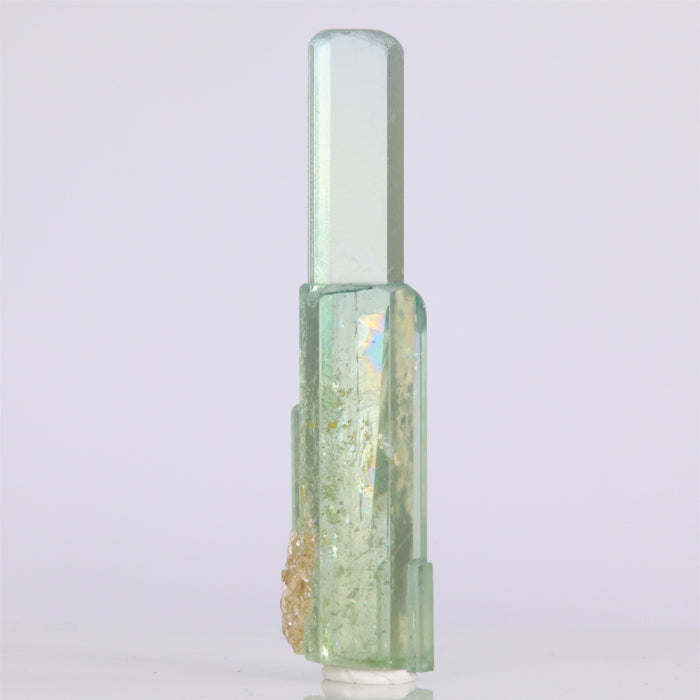
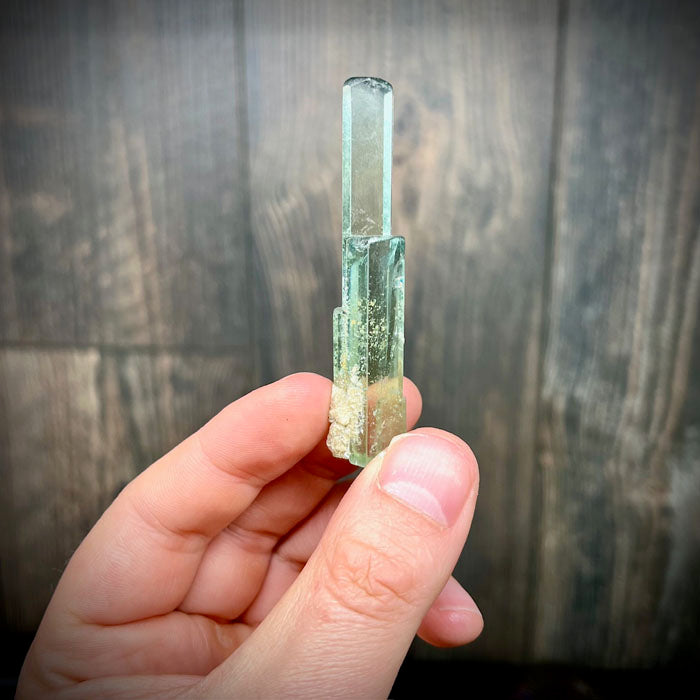
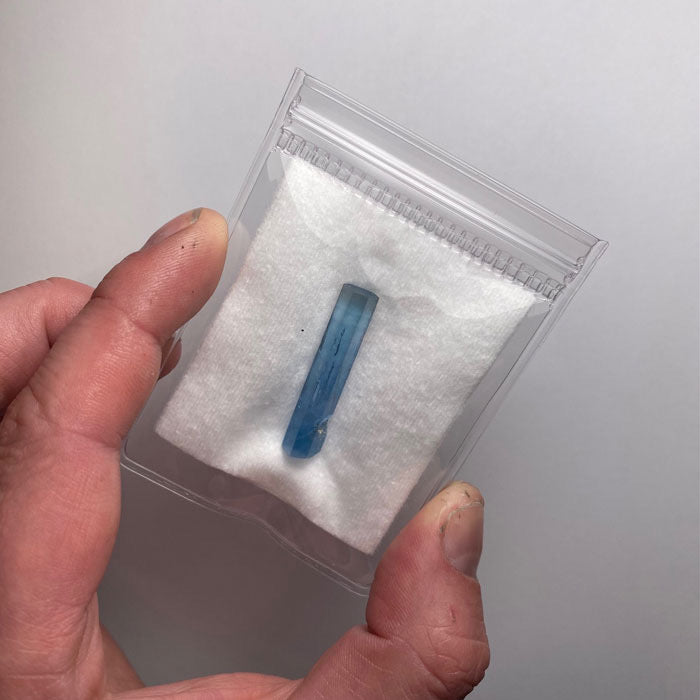
Aquamarine is a beryllium aluminum silicate mineral belonging to the beryl family, which also includes emerald, morganite, and heliodor. It crystallizes in the hexagonal crystal system, typically forming long, six-sided prismatic crystals that are transparent to translucent. The name “aquamarine” originates from the Latin aqua marina, meaning “sea water,” perfectly describing its range of colors — from light pastel blue to deep ocean blue-green hues. Its color is primarily caused by trace amounts of iron (Fe²⁺ and Fe³⁺) within the crystal structure, and heating can intensify the blue tones by removing greenish hues.
Aquamarine crystals form in pegmatitic veins, often within granitic rocks, where hot, mineral-rich fluids slowly cool over millions of years to allow large gem-quality crystals to grow. These environments produce some of the finest aquamarine crystals found on Earth — often flawless, sharply terminated, and capable of reaching impressive sizes.
Aquamarine is found in many regions worldwide, with some of the most famous sources including Brazil, known for its large, high-clarity crystals; Pakistan’s Shigar Valley, renowned for deep blue hues and fine crystal quality; Vietnam, producing intensely colored aquamarines; Nigeria, yielding stones with balanced blue-green tones; and Tanzania, known for its lighter yet exceptionally transparent material. Other notable deposits include Madagascar, Mozambique, the United States, and Zambia.
Other notable information on Aquamarine
Refractive index: 1.57–1.58
(The refractive index describes how much light bends as it passes through the gem, influencing brilliance and sparkle.)
Specific gravity: 2.68–2.74
(Specific gravity measures how heavy the gemstone is relative to the same volume of water.)
Moh’s scale: 7.5–8
(The Moh’s scale ranks a gem’s hardness and resistance to scratching; aquamarine’s durability makes it ideal for jewelry use.)
Metaphysical attributes of Aquamarine
Aquamarine has been cherished for centuries as a stone of courage, clarity, and tranquility. Ancient sailors carried it as a talisman for protection and calm seas, believing it was a gift from mermaids. Spiritually, aquamarine is said to soothe the mind and emotions, encouraging honest communication and self-expression. It resonates with the throat chakra, promoting peaceful energy, emotional balance, and truth. Often used in meditation, aquamarine is believed to quiet the mind, relieve stress, and inspire harmony between one’s heart and voice.